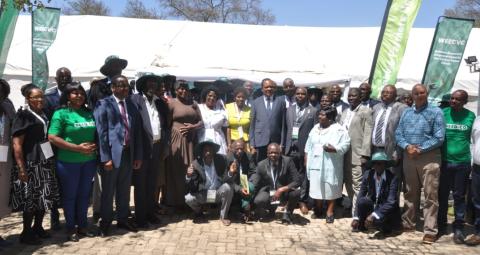
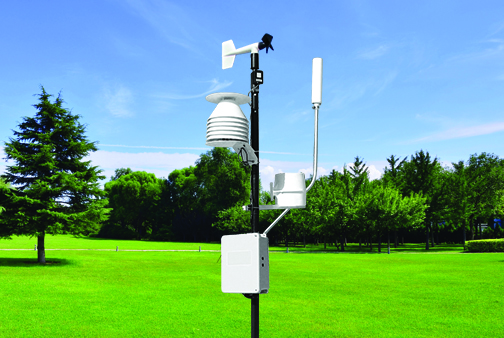
The Meteorological Services Department of Zimbabwe (MSD), in collaboration with Safe4All Africa and the Zimbabwe Farmers’ Union (ZFU), hosted a five day workshop to tackle the pressing challenges of climate change and food insecurity in Africa. Held from 23 to 27 June 2025, the workshop brought together meteorologists, journalists, farmers, civil society organizations, and key stakeholders for deep, solution-oriented dialogue on climate adaptation and the use of early warning systems. This came as a follow up after the installation of weather station in various wards in Mashonaland East
The event provided a platform to share knowledge, scale innovative solutions, and promote partnerships that support climate-smart agriculture and community resilience.
Safe4All Africa, a non-governmental organization founded in January 2024, operates across Zimbabwe, Kenya, and Ghana. Its mission is to empower vulnerable communities particularly smallholder farmers through the use of data, technology, and innovation to better prepare for and respond to climate-related risks. The organization is committed to making weather and climate information accessible, understandable, and actionable for all.
During the workshop, participants engaged with several cutting-edge tools developed by Safe4All Africa to support informed decision making at the grassroots level. These include:
-
Uliza-WI Chatbox – an AI-powered chatbot delivering localized weather forecasts, practical farming tips, and real-time alerts;
-
Drop App – a mobile application that monitors rainfall trends and issues drought alerts;
-
Climate Impact Atlas – an interactive map-based platform identifying high-risk climate impact zones;
-
24/7 Call Center Line – a dedicated telephone service providing live weather updates and expert farming advice, particularly useful for farmers with limited internet access.
With Africa warming at nearly twice the global rate, and Zimbabwe facing more frequent droughts, heatwaves, and shifting seasonal patterns, these tools are increasingly essential for safeguarding livelihoods. In Zimbabwe, over 60% of the population depends on agriculture, making timely and accessible weather information a cornerstone of food security.
The Zimbabwe Farmers’ Union (ZFU) played a vital role in mobilizing farmers to participate in the workshop and ensuring that farmer voices were central to the discussions. As Zimbabwe’s largest and most influential farming organization, ZFU continues to champion initiatives that enhance the resilience of its members and the broader farming community in the face of climate uncertainty.
“We believe that technology must be rooted in local realities,” said Dr P. Kuipa ZFU Operations Director. “By working closely with government agencies and tech innovators, we can ensure that smallholder farmers don’t get left behind in the climate conversation.”
The Meteorological Services Department reaffirmed its dedication to improving the reach and accuracy of localized weather forecasts and strengthening early warning systems. These initiatives directly support Zimbabwe’s National Adaptation Plan (NAP) and align with the goals of Vision 2030 the country’s strategic roadmap to becoming an upper-middle-income economy by the end of the decade.
The workshop concluded with a unified call to action to scale up collaboration among government agencies, NGOs, research institutions, private sector players, and farming communities. Only through such cross-sectoral partnerships can Zimbabwe and the broader region build inclusive, tech-enabled climate services that protect both people and the planet.