
Farmers to pay for insurance premiums using crops
Elita Chikwati
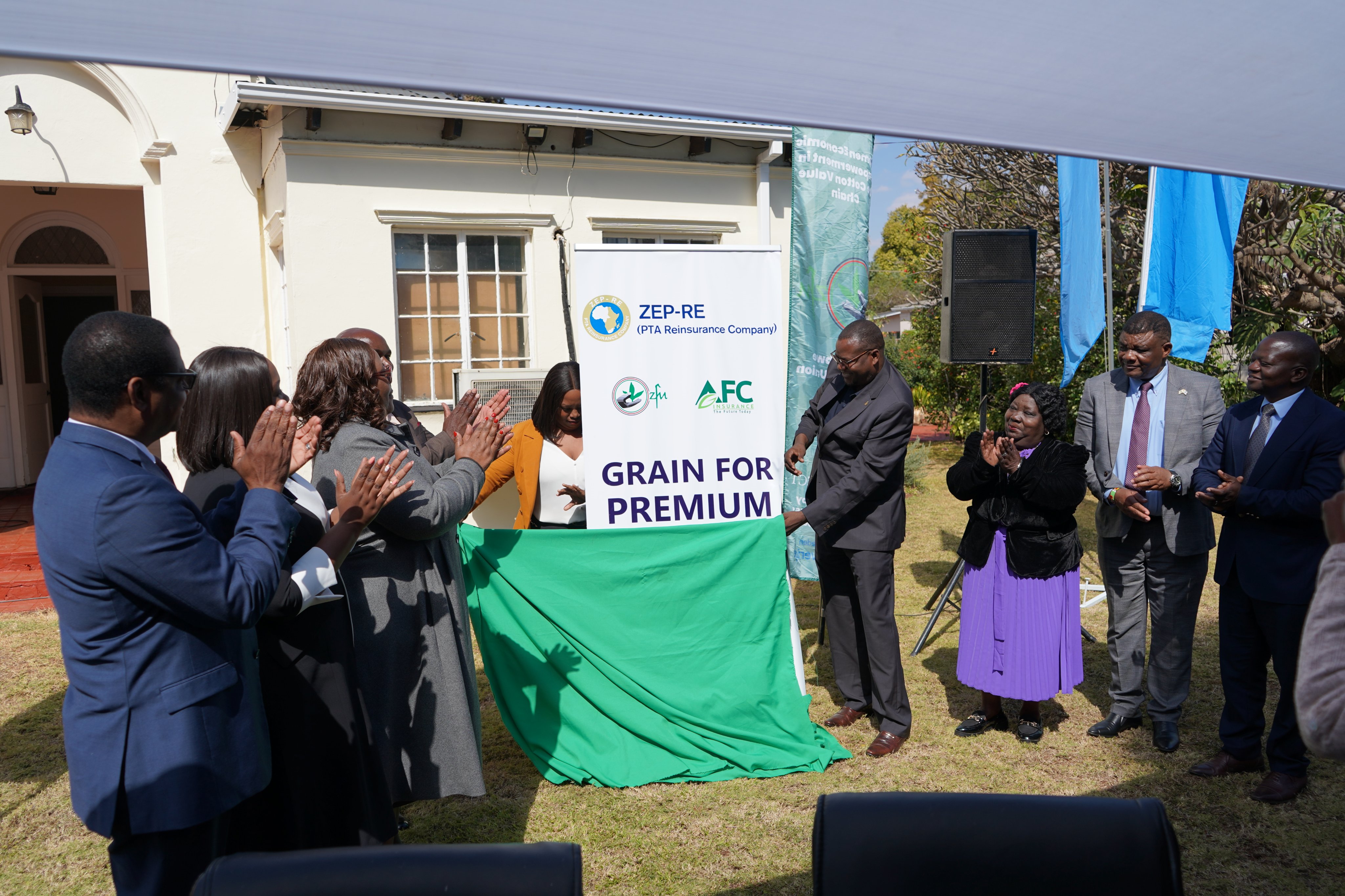
THE Zimbabwe Farmers Union, AFC Bank and Zep-Re (PTA Reinsurance Company) have rolled out Grain Premium Insurance, enabling farmers to pay premiums with maize, beans, sunflower and soyabeans instead of cash.
The facility targets smallholder farmers having challenges with upfront costs and seeks to boost resilience against climate change and food insecurity.
Premiums will be deducted through aggregators including GMB and ZMX. Livestock is also being considered for future inclusion.
Zep-RE project manager Ms Niza Banda said this insurance product was built around how farmers already lived.
“Barter trade is not new. Farmers trade grain for clothes or labour. Grain Premium Insurance takes that same logic and applies it to risk,” she said.
“The facility cushions farmers from climate shocks and solves the affordability problem. Most smallholders earn once a year and depend on rainfall.
“With this product, farmers are protected against losses from drought, floods, pests and diseases. Damage will be assessed using satellite technology.”
Zimbabwe Farmers union president Dr Jameson Jawi said the product was conceived by AFC Insurance and rolled out in collaboration with ZFU.
“We are delighted to be part of this climate risk management solution. Adoption of insurance by farmers has remained low despite efforts by various institutions to promote it,” he said. “One of the main challenges has been lack of access to finance to pay premiums. This initiative covers maize, soyabeans, sunflower and traditional grains, giving farmers flexibility in the type of produce they can use for premiums.
“The timing is critical as farmers prepare for the 2026/27 season amid the threat of an El Niño-induced drought. I urge farmers to take up this product to manage increased production risks.”
ZFU secretary general, Mr Paul Zakariya, said no inputs package was complete without insurance.
“There is a need to educate farmers. We will train our ward facilitators and district coordinators to drive uptake,” he said.
“This facility was tailor-made for smallholder farmers. Insurance companies must pay out promptly when disasters strike, and farmers lodge claims.”
IPEC commissioner Dr Grace Muradzikwa applauded AFC and the Ministry of Agriculture for coming up with the Grain for Premium Programme, which will improve financial inclusion and improve the penetration rate of insurance in Zimbabwe.
“Demand for insurance exists, but affordability remains a major challenge that must be addressed,” she said.
“In Zimbabwe, we are currently implementing a programme under the AFDB Bank, which has a premium subsidy of US$1.5 million.
“It sounds like a lot of money, but it’s not enough to pay for all our farmers and therefore, there is need for other means to support farmers or to enable farmers to pay the premium.”
AFC managing director Mr Cuthbert Masukume said the company was formed in 2021 to create solutions that mitigate the impact of climate change on farmers.
“As AFC Insurance, we were given an obligation by Government to create solutions for challenges being faced by farmers and commercial farmers,” he said.
Mr Masukume said they have 45 branches and had partnered with the ZFU that have decentralised offices for easy accessibility by farmers.
Officially launching the programme, Permanent Secretary Professor Obert Jiri in a speech read on his behalf by Chief Director Mr Clemence Bwenje said it was important to invest in agriculture and boost livelihoods and the economy.
“This initiative has come as a game changer, the innovation is part of NDS2 and Agriculture Food Systems. Insurance is one of the pillars of resilience and climate proofing agriculture,” he said.
“We must be able to produce food even in the face of climate change and be food secure. The four Ps; Public, Private Producer partnership represent partnerships for purposes.”
Prof Jiri said agriculture was key to Africa’s development, and smallholder farmers were central to it.